

Search
Globe
image
SAILOR DIARIES
The Story of Chief Engineer Sunil A. Avhad

A journey of resilience, responsibility,
and rising through uncertainty.


QUESTION 01

Sunil San, tell us about your early life. What shaped your beginnings and your sense of responsibility?

I was born in a small chawl in South Mumbai. We were four siblings, and my father was the only earning member. He worked as a licence porter (Coolie) at Mumbai Central Railway station. His income rose and fell with the seasons. April and November were good months, but during the monsoon, work would almost disappear.
Because our home was small, I studied outside on the August Kranti Maidan ground which was nearby. I would often see students preparing for competitive exams. When I asked them what they were studying for, they said CA. I didn't know what that meant, but it felt like something that could change life.
I didn't have clarity at that age. All I knew was that as the eldest child, I needed to take responsibility.
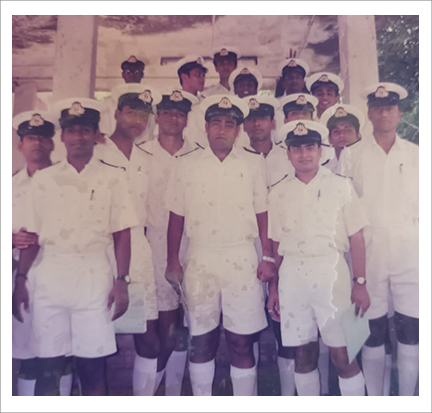

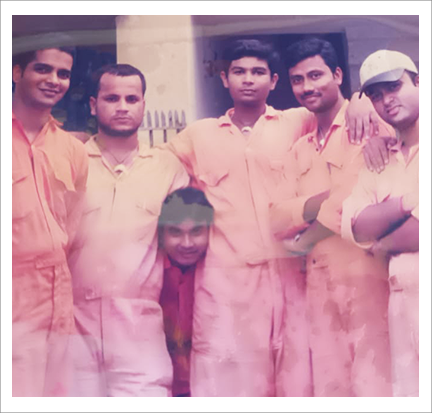
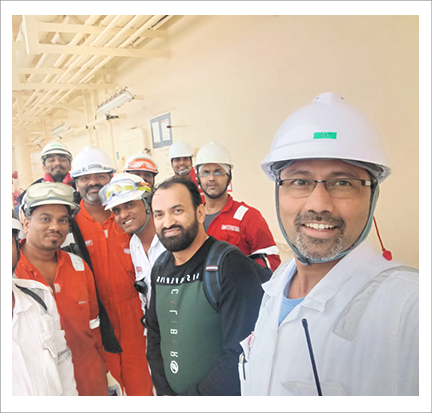
Group of young men in uniforms
QUESTION 02

When you finished school, how did you navigate the choices in front of you?

After Class 10, I wanted commerce, but my uncle suggested science since no one in the family had gone that way. I didn’t know the difference between the streams, so I took science with both maths and biology.
After Class 12, I wanted mechanical engineering, even though I didn't fully understand the field. I was getting admission in computer science in Bhavan's college (Andheri) too, but at that time, I didn't know what computer science was. So, I chose mechanical engineering simply because it felt more familiar.
I wasn't a topper, but I was sincere and hardworking during my academic .

Group of young men in uniforms
QUESTION 03

What were the early years of your career like before shipping came into the picture?

In 1999, computer science graduates were getting placements while mechanical engineers had to struggle. I joined a company in Andheri SEEPZ with a salary of five thousand rupees. After two years, I realized I didn’t see a future in that role.
The software industry was booming, so I enrolled in a course. In 2001, I joined a software company, and we were told that after training, we would be sent to the US. That gave me hope.
Then 9/11 happened. The company shut down, and we were all asked to leave the next day. The entire plan collapsed overnight.
I tried again for software roles, but nothing worked out. So, I returned to mechanical roles. That phase of uncertainty taught me to adapt quickly and stay grounded.

Group of young men in uniforms
QUESTION 04

How did the idea of joining shipping enter your life during that phase?

Through my father.
My father Mr. Anand Avhad read a Loksatta newspaper advertisement for a for a maritime training program. It required a training fees of one lakh forty thousand rupees, no salary during training for twelve months, and a promised job after training.
I hid the advertisement because I knew we could never afford that training fees. Two days later my father again asked it and asked why I wasn’t applying.
I told him the fees amount is impossible for us.
He said something that stayed with me forever:
“First clear the exam. Then we will find a way.”
I cleared the exam, the interview, and the medical test. Now the only barrier was money.
One of a jeweller was my father’s friend who agreed to lend me the amount at a slightly lower interest rate. That is how I entered the shipping world.
My first contract was for six months. I extended it to ten months only to repay the loan quickly. Once the burden of debt was gone, I finally felt I could build a future.
From 2003 onwards, my journey truly began to rise.

Group of young men in uniforms
QUESTION 05

What were your early experiences at sea like?
What stayed with you?

Life at sea was tough, but it shaped me.
The engine room demanded discipline. Days were long, and responsibilities were constant. But evenings brought everyone together. We would sit, talk, share experiences. It felt like a second family.
The toughest moments were when machinery failed at night. When your body is tired and the pressure is high, you still have to think clearly and act immediately. That kind of responsibility builds a different kind of confidence.

Group of young men in uniforms
QUESTION 06

Was there a moment at sea that truly tested you or changed your journey as an engineer?

I once sailed on a bulk carrier from a series known for generator issues. Many engineers had tried to solve the problem earlier, but nothing worked.
This was my first promotion as Chief Engineer & first time on that type of vessel. The staff was new. The challenges were real. I started from the basics.
I spoke to people.
I studied patterns.
I tested different possibilities.
And I worked with the team step by step.
In five to six months, the ship became stable. It even operated smoothly in unattended machinery space (UMS) mode, something that was earlier considered impossible.
When my contract ended after ten months and I was signing off in China, the entire team became emotional. They told me their lives had become easier because the ship had become dependable again. That bond stays with me even today.
It reinforced my belief that perseverance, patience, and teamwork can transform even the toughest situations.

Group of young men in uniforms
QUESTION 07

Seafarers often use their leave in different ways for family, learning, rest, or even exploring new interests. What did those leave periods mean to you

For me, leave was a time to reflect on how I could create some steady support for my family while giving my full dedication to sailing. With my wife Mrs. Kavita Avhad's support, I started exploring opportunities. I bought a small piece of land in 2017 and began setting up a solar project.
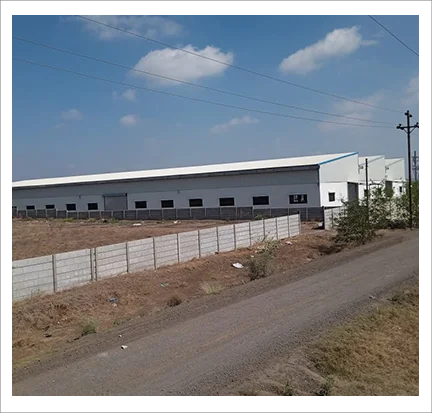
Because of changes in government policies and rising costs, the solar plan didn't move forward. So I used the land differently. I built a simple industrial shed of 43,000 sq. Ft. and leased it out. Now, I have started constructing one more shed and planning to leased that too.
These are passive investments. They do not interfere with my work at sea. My primary commitment remains to my ship, my crew, and MOL.
These decisions were never about running a parallel business. They were about creating long-term security for my family.

Group of young men in uniforms
QUESTION 08

After everything you've experienced, what do you feel matters more - hard work or destiny?

Both play a role.
Hard work is the foundation. Without it, destiny cannot open any door. But in life, certain people and opportunities appear at the right time. That too is destiny.
If you work sincerely, destiny supports you.

Group of young men in uniforms
QUESTION 09

What would you like young people to know about a career at sea?

It is a career that tests you and strengthens you at the same time.
It builds discipline, problem solving skills, teamwork, and resilience. You learn to take responsibility, to think clearly under pressure, and to stay humble no matter how big the challenge.
If you give your best, the sea gives you confidence, stability, and a world of experiences you cannot get anywhere else.
For young people who want a meaningful career, this field has immense potential. It gives you exposure, learning, and financial strength from a young age.
I feel it is 100% true in my case. Started with very old tanker now I am working on modern FSRU in MOL.

Group of young men in uniforms
QUESTION 10

And finally, how would you describe MOL as an organization and a place to build a career?

MOL takes care of its people. Whether it is safety, learning, or career growth, the organisation ensures that every seafarer is supported. I have always felt respected, heard, and valued.
What stands out is the culture of trust. People recognise sincerity. They guide you, encourage you, and help you grow.
For anyone considering joining us — you become part of a family that stands by you at sea and on land.

Group of young men in uniforms