
Search
Globe

World At Sea

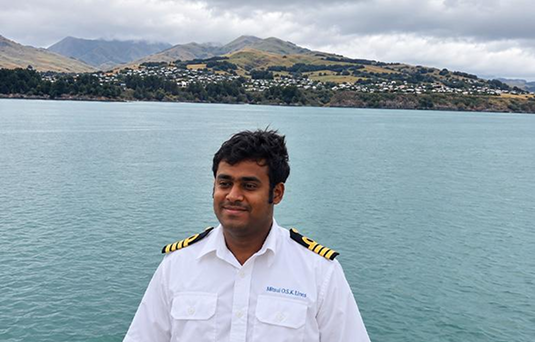
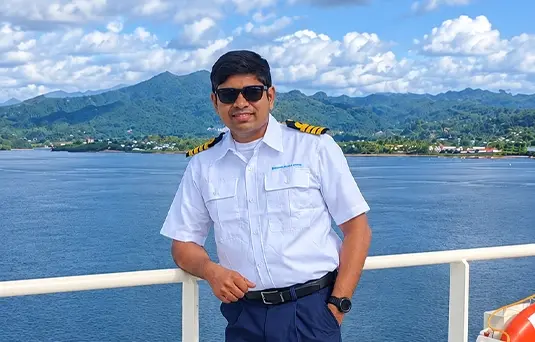
Sea to Strategy: The Journey of Capt. Jaideep Singh Gadri

Captain, Jaideep Singh Gadri

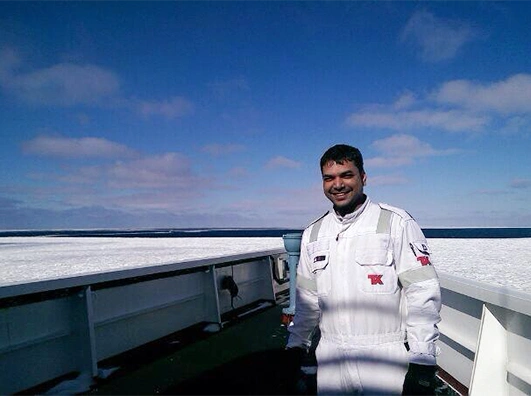
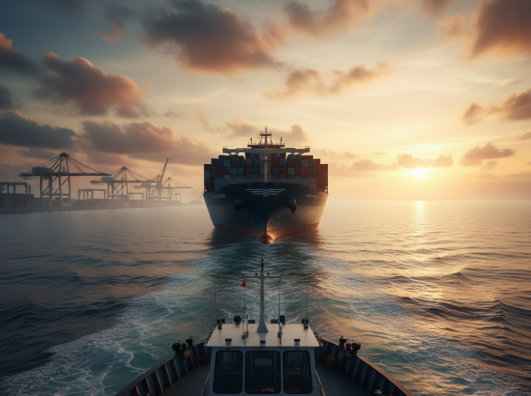
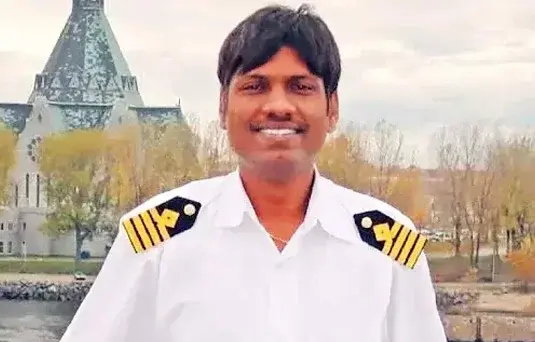
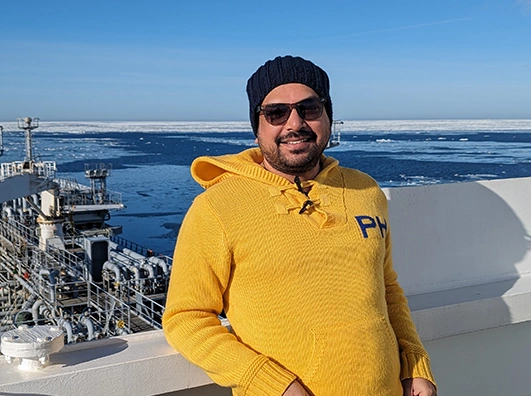
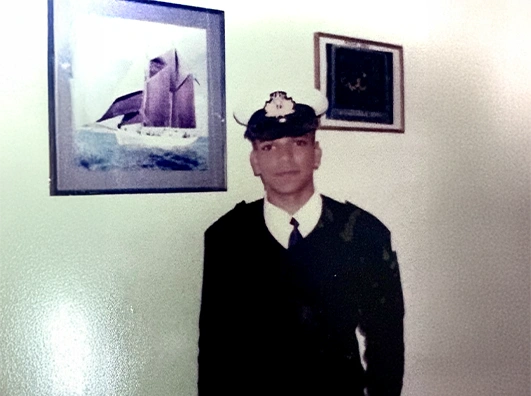
"The ocean teaches you humility. No matter how experienced you are, it always reminds you who is in charge." For nearly two decades, Capt. Jaideep woke up to a different horizon. Some mornings, it was the calm blue of the ocean. On others, it was ice-covered waters stretching endlessly into the distance. There were days when dolphins raced alongside his vessel and nights when the sea seemed to glow beneath the ship, illuminated by a rare phenomenon called Bioluminescence. And then there were the storms. The kind that forces entire fleets to change course. The kind that reminds even the most experienced seafarers that nature always has the final word. Today, he brings those experiences ashore. But long before he came across those experiences, he was simply a young student from Mumbai with no plans of joining the maritime industry. In this edition of From Sea to Strategy, he reflects on the twists, challenges and unforgettable moments that shaped a career spanning more than two decades at sea.
01
Capt. Jaideep, let’s start at the beginning. Did you always know you wanted a career at sea?
Not at all. In fact, shipping was never part of the plan.
I grew up in Mumbai and, like many students at the time, assumed I would follow a fairly conventional career path. Engineering seemed like the natural option, and I had already secured admission to an engineering college. The maritime industry wasn’t something I knew much about.
Then one day, a family friend who worked at sea happened to visit our home. During a casual conversation, he asked if I had ever considered the Merchant Navy. I hadn’t.
What followed turned out to be a very influential conversation of my life.
He spoke about travelling the world, visiting places which most people only read about and building a career that combined adventure with responsibility.
As an 18-year-old, that idea was impossible to ignore.
Looking back, it’s remarkable how one conversation can change the direction of an entire life.
02
Your journey wasn’t exactly smooth from the start, was it?
No, it wasn’t. I was selected by a shipping company in 2001 and completed my pre-sea training, expecting to join a vessel soon afterwards.
Then 9/11 happened. The company that had recruited me operated primarily in the United States. Suddenly, visa approvals became extremely difficult and what I expected to be a short wait turned into nearly two years of uncertainty. Imagine being a young person who has chosen a career, completed the training and is ready to begin, only to be told to wait.
And then keep waiting.
Many of my friends had already started moving forward in their careers while I was still sitting at home wondering whether my opportunity would ever come.
There were moments when I questioned my decision.
There were moments when I considered starting over.
But somewhere deep down, I felt that if I had come this far, I should stay patient and trust the process.
In 2003, that patience finally paid off when my visa was approved and I received my first vessel assignment.
03
Do you remember your first day onboard?
Very clearly. I joined my first vessel in the United States in 2003. People often imagine a glamorous beginning. The reality is very different.
You are young. You are far away from home. You are surrounded by people you have never met. You are entering an environment where discipline is non-negotiable and where everyone expects you to learn quickly.
I remember feeling excited and nervous at exactly the same time.
And homesick. Very homesick.
For the first time in my life, I was thousands of miles away from my family.
There were no video calls. No social media. No instant messaging. Communication back then was limited and expensive.
You learn to deal with it.
04
What was the toughest lesson the sea taught you as a young cadet?
That nobody owes you comfort.
One senior officer looked at me and said something I still remember today: “Forget the pampering you received at home. Life is different now.”
At the time, it sounded harsh.
Years later, I realised it was one of the most valuable lessons I received.
The sea forces you to grow up quickly. You become more disciplined. More organised. More accountable. Because out there, excuses don’t solve problems.
Only actions do.
05
Your first contract also came with an unexpected challenge.
Yes. I suffered an injury onboard after falling on deck. For a young cadet on his very first vessel, it was a frightening experience.
I was eventually signed off for treatment and rehabilitation.
What worried me most wasn’t the injury itself. It was the fear that my maritime career might end before it had really begun.
Thankfully, after completing treatment and medical assessments, I was cleared to return to sea and joined my next vessel.
Looking back, it taught me another important lesson: a setback is not the end of the journey unless you decide it is.
06
Many people don’t realise how long the road to becoming a Captain actually is. How did your own progression unfold?
It takes years. You begin as a Cadet. After few years of cadetship, attend college, and after clearing the exams, you get your license and get posted as a Third Officer, then Second Officer, Chief Officer and eventually Captain.
Each promotion brings greater responsibility.
I became a Third Officer in 2008, a Chief Officer in 2014 and eventually attained the promotion to Captain.
Every rank teaches you something different. As a cadet, you begin to learn. As an officer, you begin to execute. As a Chief Officer, you begin to lead. As a Captain, every decision ultimately rests with you.
And that responsibility changes the way you think.
07
Was there ever a moment at sea that truly tested your nerves?
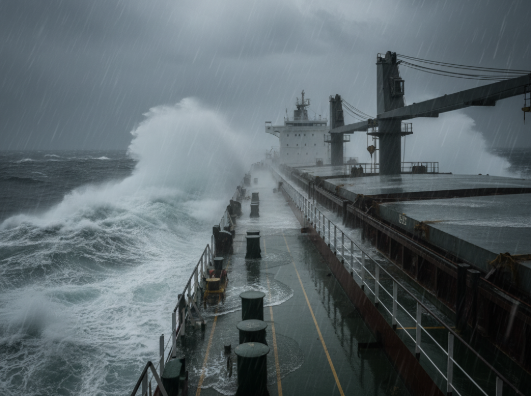
Without question. One experience that stays with me involved a major storm, hurricane Irene.
We were sailing in the North Atlantic Ocean, enroute to the east coast of USA, when weather reports declared the formation of a powerful storm, which would come in the way of our planned route.
While several vessels in the region chose to wait and even reverse courses, we sailed ahead. At the time, I was serving as Second Officer and was responsible for navigation planning.
Under the expert guidance of our captain, we put the theory into practice, reworked courses, continuously monitored the storm’s movement and carefully manoeuvred around and out of the system.
During those four days, the vessel was moving heavily. The crew knew something significant was happening. But moments like these are where preparation matters. Training matters. Teamwork matters.
We successfully navigated around the storm and eventually became one of the first vessels to arrive at Philadelphia with cargo, a feat recognized and commended by our charterers.
It was one of the most demanding and rewarding experiences of my career.
08
Over the years, you’ve seen things most people will never experience. What memories stand out?
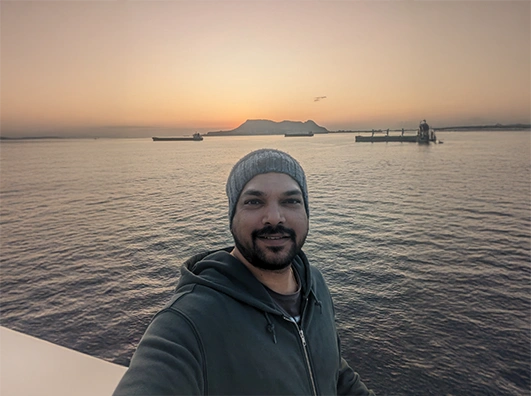
People often ask me about storms, ports and difficult voyages. But strangely enough, what I miss most is something very simple. Sunrises and sunsets.
When I became Chief Officer, my navigational watchkeeping was from 4 AM to 8 AM and 4 PM to 8 PM. Every morning I watched the sunrise. Every evening I watched the sunset. No two were ever the same.
Out there, with nothing but the horizon around you, those moments give you a sense of perspective that is difficult to describe.
Then there were the extraordinary moments. Sailing through waters illuminated by bioluminescence where the ocean seemed to glow around the vessel at night. Navigating through icy regions where the entire horizon suddenly turns white. Watching seals and walruses resting on floating ice.
Those are experiences few people get to witness and they stay with you forever.
09
After years of telling your family stories about life at sea, did they ever get to experience it themselves?
Yes, and it remains one of my favourite memories.
In 2017, while serving on a gas carrier, one of our voyages brought us to New Mangalore. My parents were able to come onboard and visit the ship. By then, I had already spent nearly 14 years at sea.
They had heard countless stories over the years and seen photographs, but seeing the vessel in person was a completely different experience.
I still remember their reaction. For me, it felt special because they could finally see and understand the world that had been such a big part of my life for so many years.
10
In 2017, you moved from oil tankers to gas carriers. Why?
I had spent almost 14 years on oil tankers and thoroughly enjoyed the experience, but I was increasingly fascinated by the technology behind gas carriers.
Gas carriers operate under completely different conditions and require a deeper understanding of cargo behaviour, temperature and pressure management and specialised safety systems.
Gas shipping presented an opportunity to learn something entirely new while working in a segment that was becoming increasingly important to the future of global energy transportation.
So, in 2017, I made the move. It meant stepping out of my comfort zone and learning again, but that was exactly what made it exciting.
11
After spending so many years at sea, what made you decide to come ashore?
Family. For many seafarers, this becomes the defining question at some point in their careers.
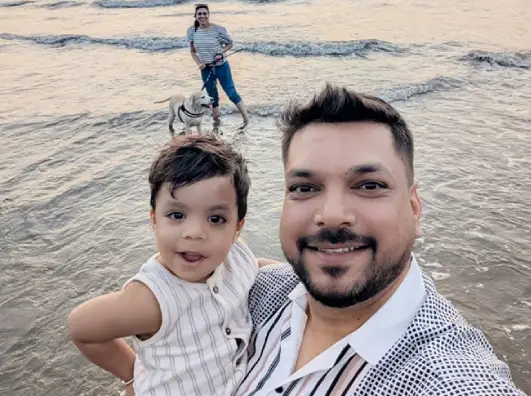
I always felt that when I became a parent, I wanted to be present during my child’s formative years.
Life at sea is rewarding, but it also comes with sacrifices. You miss birthdays. Family occasions. Important milestones.
Eventually, I reached a point where I wanted to contribute in a different way while spending more time with my family.
It wasn’t an easy decision, but it felt right.
12
Shipping has traditionally been a male-dominated industry. What would you say to women considering a career at sea today?
I would absolutely encourage them to explore it.
The industry is changing and becoming more inclusive every year. What matters at sea is professionalism, competence and attitude. Not gender.
Like any transition, it requires awareness, adaptation and support from everyone involved.
But there is definitely space for women in maritime and I believe we will continue to see more women taking on leadership roles across the industry.
The opportunities today are far greater than they were when I started my career.
13
After spending most of your career at sea and working with different organisations, what has your experience at MOL been like?
One word: transparency.
That was one of the first things I noticed. Whether it’s town halls, leadership communication or day-to-day interactions, there is a genuine effort to keep people informed and aligned.
The maritime industry is built on trust. When people understand the direction of the organisation and feel connected to its purpose, it creates a stronger culture.
That’s something I have appreciated about MOL.
14
Finally, if a young cadet were standing in front of you today, preparing to board their first vessel, what would you tell them?
Don’t join shipping because somebody told you the money is good.
Join because you are curious about the world and willing to embrace responsibility.
The first few years can be challenging. You will make mistakes. You will face setbacks. You will question yourself. That’s normal.
The sea will test your patience, discipline and resilience in ways few professions can.
But if you stay committed, the experiences you gain will shape you for life. And one day, you will look back and realise that the challenges you once worried about were actually preparing you for everything that came afterwards.