


World At Sea
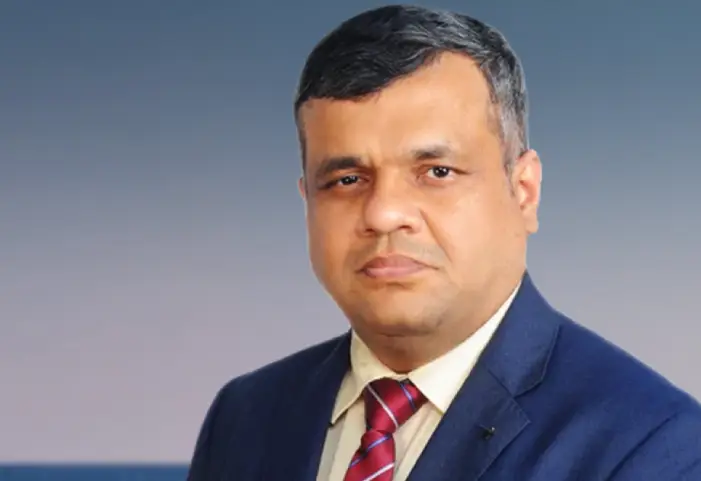
Sea to Strategy: The Journey of Capt. Apurva Prasad
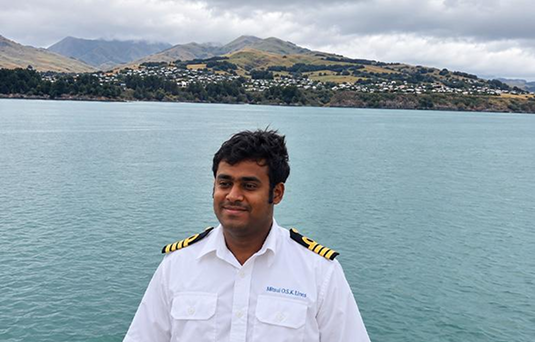
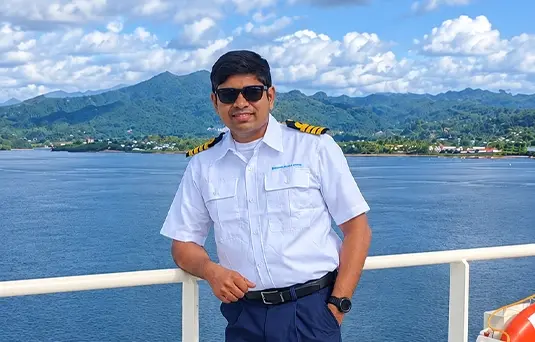
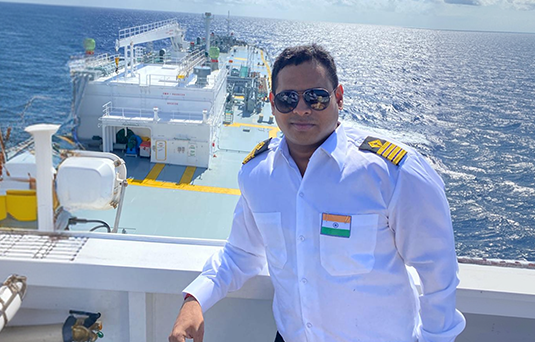
Capt. Apurva Prasad
"The sea doesn't tell you who you are. It quietly reveals it."
01
Captain Apurva, before the uniforms, the voyages and the years at sea, who was young Apurva? Tell us about where it all began.
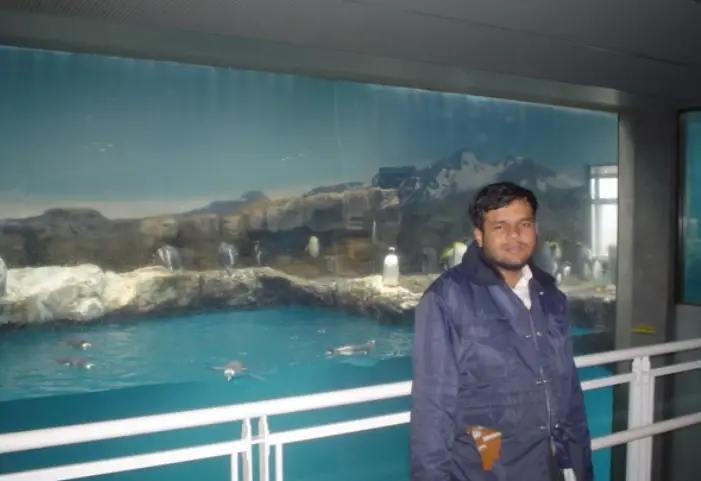
My story actually begins in Mumbai. That's where I was born and spent my early years before my family moved to Chennai. My father had an interesting journey himself. He had been a seafarer before moving into government service and later teaching. So, shipping was never an unfamiliar word at home. It was always there in the background, although not in a way that made me think, "One day I'll do the same."
Like most youngsters, I had my own ambitions. I was keen on studying medicine and that's where I thought my future was heading. Life, however, had different plans. When that didn't work out, I found myself looking at opportunities I hadn't seriously considered before. Looking back today, I realise that what felt like a detour at eighteen eventually became the defining journey of my life.
Like most youngsters, I had my own ambitions. I was keen on studying medicine and that's where I thought my future was heading. Life, however, had different plans. When that didn't work out, I found myself looking at opportunities I hadn't seriously considered before. Looking back today, I realise that what felt like a detour at eighteen eventually became the defining journey of my life.
02
Was it difficult accepting that change? Most of us spend years trying to come to terms with a dream that doesn't work out.
There is always a little disappointment when life doesn't unfold the way you've imagined it. I was no different. But one thing my father had always instilled in us was respect for the profession he came from. He never romanticised life at sea, nor did he ever complain about it. He spoke about it with pride.
That made a difference.
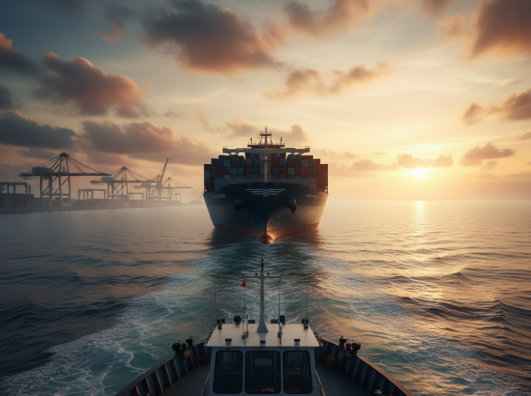
When I eventually entered the Nautical branch of Marine profession (just like my father), I wasn't stepping into something completely unknown. I knew it was a profession built on discipline, responsibility and commitment. The uncertainty was more about whether I would enjoy it. That answer came only after I stepped onboard my first ship.
Sometimes we spend too much time wondering whether we've chosen the right path. I've realized over the years that the path often reveals itself only after you've started walking on it.
That made a difference.
When I eventually entered the Nautical branch of Marine profession (just like my father), I wasn't stepping into something completely unknown. I knew it was a profession built on discipline, responsibility and commitment. The uncertainty was more about whether I would enjoy it. That answer came only after I stepped onboard my first ship.
Sometimes we spend too much time wondering whether we've chosen the right path. I've realized over the years that the path often reveals itself only after you've started walking on it.
03
Every seafarer remembers that first voyage. What do you remember about yours?
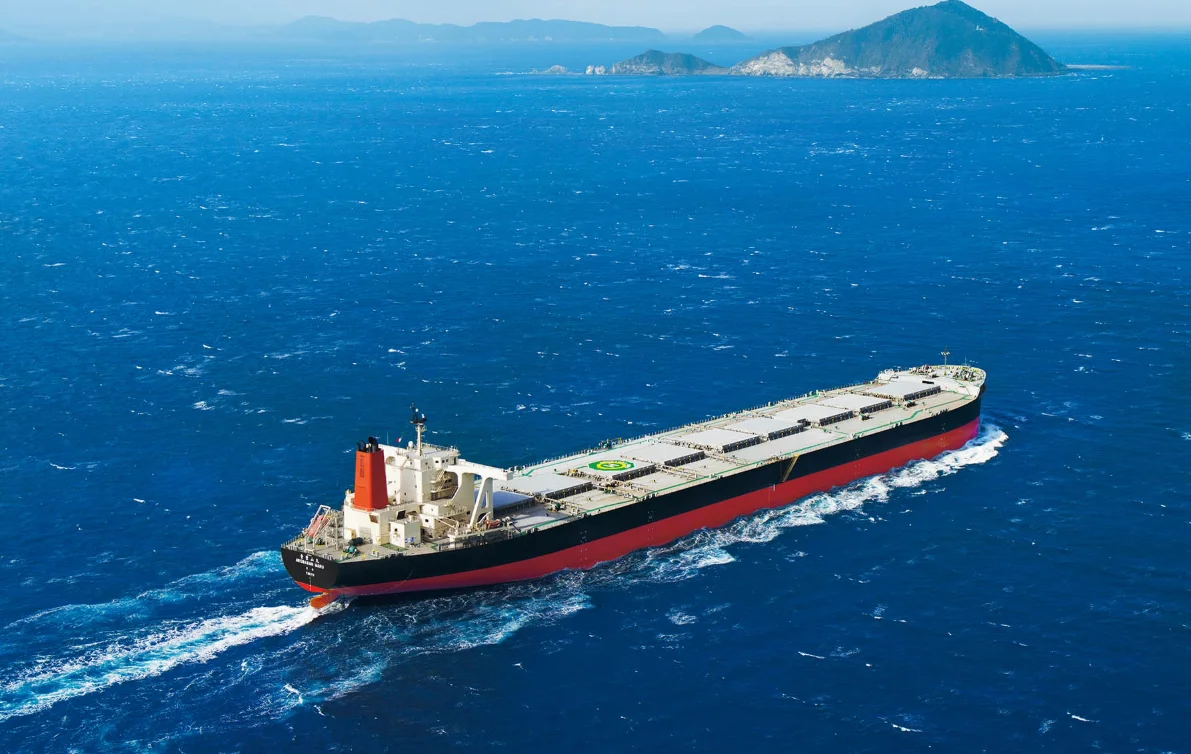
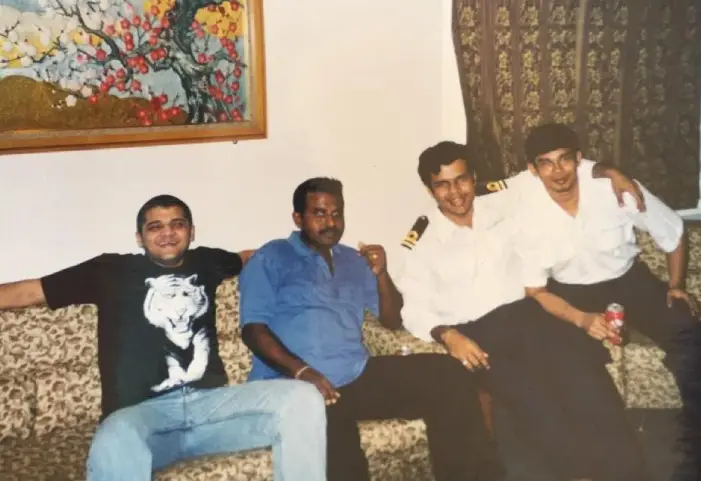
What struck me wasn't the size of the ship. It was the realisation that this wasn't simply a workplace. It was where we would live, work and depend on one another for months at a stretch.
Life ashore prepares you for many things, but it doesn't prepare you for life at sea. The routines are different. The responsibilities are different. More importantly, the mindset is different.
Very quickly you understand that every role matters. There's very little room for complacency because your work affects everyone around you. You learn to become self-reliant, but at the same time you also learn that success at sea is never individual. It always comes from working together as a crew.
Looking back, I think those early years taught me lessons that no classroom ever could.
Life ashore prepares you for many things, but it doesn't prepare you for life at sea. The routines are different. The responsibilities are different. More importantly, the mindset is different.
Very quickly you understand that every role matters. There's very little room for complacency because your work affects everyone around you. You learn to become self-reliant, but at the same time you also learn that success at sea is never individual. It always comes from working together as a crew.
Looking back, I think those early years taught me lessons that no classroom ever could.
04
You've now spent over twenty-five years with MOL. That's a remarkable association in today's world. When did it stop being just a job and start feeling like home?
I don't think there was one defining moment. It happened gradually.
When you spend years at sea, you experience difficult situations, long periods away from family and moments where you need support more than anything else. What stayed with me throughout my journey was that I never felt I was facing those situations alone.
Whether I was sailing or later working ashore, there has always been a culture of people helping one another. Sometimes it's a senior who guides you through a difficult situation. Sometimes it's a colleague who simply listens. Those things may seem small, but over a career they make a tremendous difference.
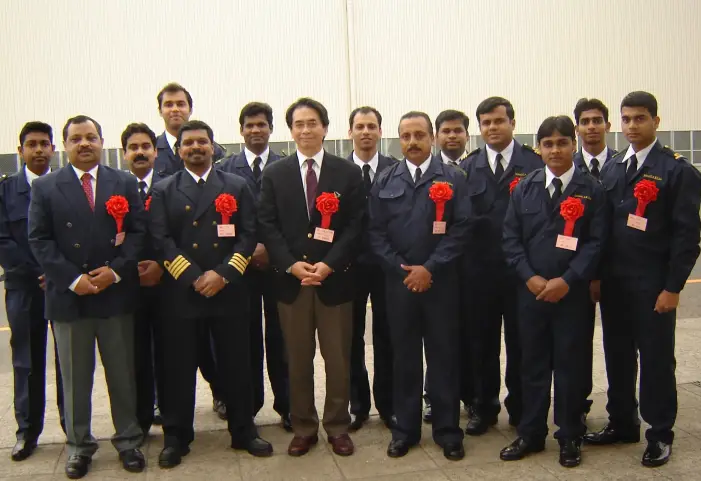
People often ask me why I've stayed with one organisation for so long. My answer is very simple. Professional growth is important, but equally important is the environment in which that growth happens. I've always felt that MOL genuinely cares about its people, and that's something I've valued throughout my journey.
When you spend years at sea, you experience difficult situations, long periods away from family and moments where you need support more than anything else. What stayed with me throughout my journey was that I never felt I was facing those situations alone.
Whether I was sailing or later working ashore, there has always been a culture of people helping one another. Sometimes it's a senior who guides you through a difficult situation. Sometimes it's a colleague who simply listens. Those things may seem small, but over a career they make a tremendous difference.
People often ask me why I've stayed with one organisation for so long. My answer is very simple. Professional growth is important, but equally important is the environment in which that growth happens. I've always felt that MOL genuinely cares about its people, and that's something I've valued throughout my journey.
05
When you first went to sea, staying connected with family meant waiting for letters or the occasional phone call. Today's young seafarers have video calls, social media and constant connectivity. Do you ever feel they've missed something your generation experienced?
Every generation has its own challenges.
When I started sailing, communication was extremely limited. There were no smartphones or video calls. Sometimes weeks would pass before you could speak to your family. You simply accepted that as part of the profession.
Today's generation is undoubtedly more connected, and I think that's a positive change. Being able to speak to your family regularly makes a significant difference to a person's well-being.
Having said that, some things haven't changed at all.
The sea still expects the same discipline, the same professionalism and the same ability to remain calm under pressure. Technology can make life more comfortable, but it cannot replace those qualities. In many ways, the fundamentals of being a good seafarer remain exactly the same today as they were when I first stepped onboard.
When I started sailing, communication was extremely limited. There were no smartphones or video calls. Sometimes weeks would pass before you could speak to your family. You simply accepted that as part of the profession.
Today's generation is undoubtedly more connected, and I think that's a positive change. Being able to speak to your family regularly makes a significant difference to a person's well-being.
Having said that, some things haven't changed at all.
The sea still expects the same discipline, the same professionalism and the same ability to remain calm under pressure. Technology can make life more comfortable, but it cannot replace those qualities. In many ways, the fundamentals of being a good seafarer remain exactly the same today as they were when I first stepped onboard.
06
Over the years, you've sailed on different kinds of vessels and crossed countless oceans. Was there one voyage that changed you not just as a seafarer, but as a person?
There is one voyage I will probably remember for the rest of my life.
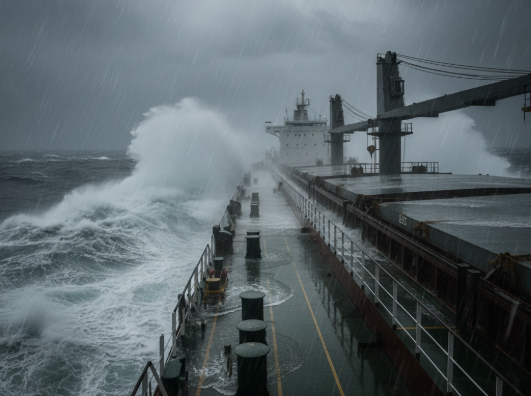
We were crossing the Pacific Ocean from Japan towards Panama when a distress alert came through. Another vessel had suffered serious damage and was taking on water. We altered course immediately and headed towards the position they had transmitted.
By the time we reached, the situation had become critical. The vessel was listing heavily, and it was evident that she wasn't going to survive much longer. Our priority was to bring every single crew member to safety.
We managed to rescue all 23 people on board before the vessel finally disappeared beneath the sea.
People often imagine moments like these as dramatic, but when you're actually there, you don't have the luxury of thinking about drama. Your entire focus is on doing what needs to be done. It is only much later, when everything is over, that the magnitude of what happened truly sinks in.
That day reminded me that the sea can be unpredictable, but it also brings out the very best in people. When another ship is in distress, there is no question of who they are or where they come from. You simply go and help. That's an unwritten rule every seafarer understands.
We were crossing the Pacific Ocean from Japan towards Panama when a distress alert came through. Another vessel had suffered serious damage and was taking on water. We altered course immediately and headed towards the position they had transmitted.
By the time we reached, the situation had become critical. The vessel was listing heavily, and it was evident that she wasn't going to survive much longer. Our priority was to bring every single crew member to safety.
We managed to rescue all 23 people on board before the vessel finally disappeared beneath the sea.
People often imagine moments like these as dramatic, but when you're actually there, you don't have the luxury of thinking about drama. Your entire focus is on doing what needs to be done. It is only much later, when everything is over, that the magnitude of what happened truly sinks in.
That day reminded me that the sea can be unpredictable, but it also brings out the very best in people. When another ship is in distress, there is no question of who they are or where they come from. You simply go and help. That's an unwritten rule every seafarer understands.
07
Listening to you, one gets the sense that leadership at sea isn't really about rank. It's about the ability to stay calm when everyone else is looking for direction. Is that a fair way to describe it?
I think that's exactly what leadership at sea is.
People often associate the captain's role with authority, but authority is actually the easy part. The difficult part is making the right decision when the situation is uncertain.
During an emergency, everyone naturally looks towards the captain. Not because he has all the answers, but because somebody has to make a decision. And once that decision is made, everyone moves together.
I've always believed that a captain has to be prepared long before an emergency actually happens. Experience, training and discipline are what give you the confidence to make decisions under pressure. You may not always have perfect information, but you cannot afford hesitation.
That's a lesson that has stayed with me even after moving ashore. Leadership is rarely about having complete certainty. It's about taking responsibility when it matters most.
People often associate the captain's role with authority, but authority is actually the easy part. The difficult part is making the right decision when the situation is uncertain.
During an emergency, everyone naturally looks towards the captain. Not because he has all the answers, but because somebody has to make a decision. And once that decision is made, everyone moves together.
I've always believed that a captain has to be prepared long before an emergency actually happens. Experience, training and discipline are what give you the confidence to make decisions under pressure. You may not always have perfect information, but you cannot afford hesitation.
That's a lesson that has stayed with me even after moving ashore. Leadership is rarely about having complete certainty. It's about taking responsibility when it matters most.

08
After spending almost fourteen years at sea and eventually becoming a Master, you chose to move ashore. That couldn't have been an easy decision. What made you take that call?
Professionally, I was happy sailing. I genuinely enjoyed life at sea and everything that came with it.
The decision had very little to do with my career and everything to do with my family.
By then, my son was growing up, and my wife and I both felt that those were years I didn't want to miss. Life at sea asks a great deal from not just the seafarer but also from the family waiting back home. My wife had been incredibly supportive throughout my sailing career, and when we discussed the future, we both agreed that it was the right time for me to move ashore.
Looking back, I don't see it as leaving the sea. I simply found another way of contributing to an industry that had already given me so much.
The decision had very little to do with my career and everything to do with my family.
By then, my son was growing up, and my wife and I both felt that those were years I didn't want to miss. Life at sea asks a great deal from not just the seafarer but also from the family waiting back home. My wife had been incredibly supportive throughout my sailing career, and when we discussed the future, we both agreed that it was the right time for me to move ashore.
Looking back, I don't see it as leaving the sea. I simply found another way of contributing to an industry that had already given me so much.
09
You've experienced shipping from both sides first at sea and now ashore. Has that changed the way you look at the people who are sailing today?
Very much.
When you've sailed yourself, you understand that every report, every request and every decision coming from a ship has a human story behind it.
You know what it's like to spend months away from family. You understand the pressures of weather, operations, fatigue and decision-making. That experience helps you look beyond procedures and appreciate the people behind them.
Working ashore has certainly broadened my perspective, but sailing gave me empathy. Whenever I interact with our seafarers today, I don't just see officers on a vessel. I see people who are living the same life I once lived.
I think that makes conversations more meaningful because there's an understanding that comes only from shared experience.
When you've sailed yourself, you understand that every report, every request and every decision coming from a ship has a human story behind it.
You know what it's like to spend months away from family. You understand the pressures of weather, operations, fatigue and decision-making. That experience helps you look beyond procedures and appreciate the people behind them.
Working ashore has certainly broadened my perspective, but sailing gave me empathy. Whenever I interact with our seafarers today, I don't just see officers on a vessel. I see people who are living the same life I once lived.
I think that makes conversations more meaningful because there's an understanding that comes only from shared experience.

10
Looking back today, is there one lesson the sea has taught you that continues to guide you every single day?
If there's one lesson, it's that difficult situations don't build character overnight, they reveal the character you've been building all along.
Life at sea teaches you discipline, resilience and patience, but above all, it teaches you to remain composed when circumstances are beyond your control.
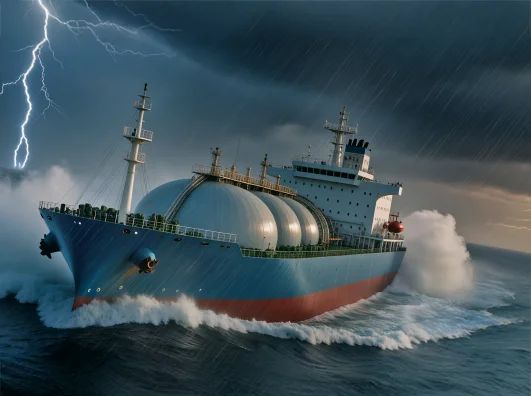
The sea doesn't change because you're having a bad day. Weather doesn't become easier because you're tired. You learn to accept what you cannot control and focus completely on what you can.
Over the years, I've realised that this way of thinking isn't useful only on a ship. It's equally valuable in life. Whatever challenges come your way, staying calm and approaching them with a clear mind is often the biggest advantage you can have.
Life at sea teaches you discipline, resilience and patience, but above all, it teaches you to remain composed when circumstances are beyond your control.
The sea doesn't change because you're having a bad day. Weather doesn't become easier because you're tired. You learn to accept what you cannot control and focus completely on what you can.
Over the years, I've realised that this way of thinking isn't useful only on a ship. It's equally valuable in life. Whatever challenges come your way, staying calm and approaching them with a clear mind is often the biggest advantage you can have.
11
Few industries have witnessed change as dramatically as shipping. From sailing in an era with limited communication to today's world of automation and AI, you've experienced that transformation firsthand. Which change has had the biggest impact, in your view?
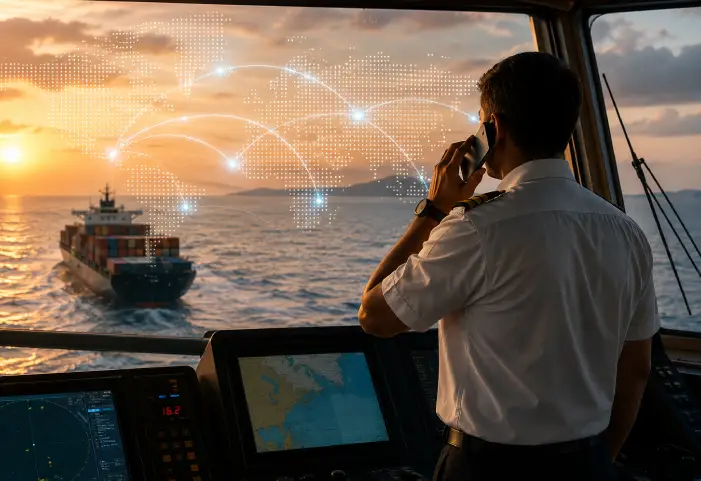
The biggest change has undoubtedly been connectivity.
When I first went to sea, communication with home was extremely limited. You couldn't simply pick up a phone or make a video call whenever you wanted. Sometimes, weeks would pass before you heard a familiar voice. That was simply part of life at sea, and everyone accepted it.
Today, things are very different. Seafarers are far more connected with their families and with the world. Information moves instantly, ships communicate in real time, and many processes that once took days now happen within minutes.
Technology has certainly made the profession more efficient, but I also believe it has made life on board more humane. Staying connected with family makes a real difference to a person's well-being, especially when you're away for long periods.
When I first went to sea, communication with home was extremely limited. You couldn't simply pick up a phone or make a video call whenever you wanted. Sometimes, weeks would pass before you heard a familiar voice. That was simply part of life at sea, and everyone accepted it.
Today, things are very different. Seafarers are far more connected with their families and with the world. Information moves instantly, ships communicate in real time, and many processes that once took days now happen within minutes.
Technology has certainly made the profession more efficient, but I also believe it has made life on board more humane. Staying connected with family makes a real difference to a person's well-being, especially when you're away for long periods.
12
You have an interesting perspective on AI. While many people see it as the future, you've often said that judgement should never be outsourced. Why do you feel so strongly about that?
I'm not against technology. In fact, shipping has always evolved because of technology.
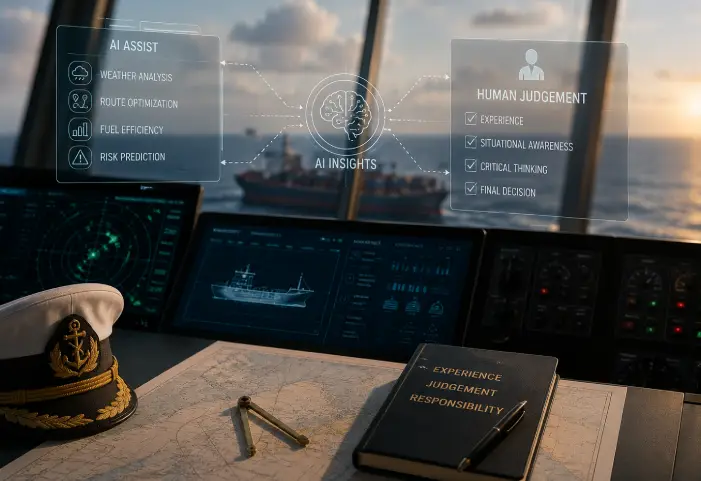
My concern begins when technology starts replacing judgement rather than supporting it.
Every new system is introduced to make our work safer or more efficient, and that's a good thing. But the danger lies in becoming so dependent on technology that we gradually stop thinking for ourselves.
At sea, situations rarely follow a textbook. Every decision has to consider weather, people, cargo, equipment and several other variables. Technology can provide information, analyse data and even suggest solutions, but the responsibility of making the final decision will always remain with a human being.
That's why I believe experience and critical thinking will never lose their value, regardless of how advanced technology becomes.
My concern begins when technology starts replacing judgement rather than supporting it.
Every new system is introduced to make our work safer or more efficient, and that's a good thing. But the danger lies in becoming so dependent on technology that we gradually stop thinking for ourselves.
At sea, situations rarely follow a textbook. Every decision has to consider weather, people, cargo, equipment and several other variables. Technology can provide information, analyse data and even suggest solutions, but the responsibility of making the final decision will always remain with a human being.
That's why I believe experience and critical thinking will never lose their value, regardless of how advanced technology becomes.
13
The maritime industry today is also becoming more diverse, with more women choosing careers at sea. As someone who has watched the industry evolve over nearly three decades, how do you see that change?
I see it as a very positive development.
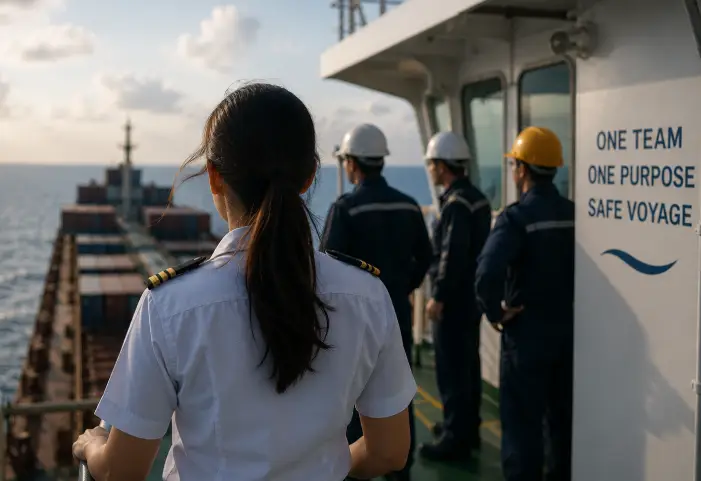
To me, competence has never been determined by gender. The sea demands professionalism, discipline and technical knowledge from everyone. Those expectations don't change depending on who is on board.
What's encouraging today is that more women are choosing to enter the profession, and organisations like MOL are actively creating opportunities for them. As the numbers increase, perceptions will continue to evolve naturally.
At the end of the day, a ship functions because every individual performs their role well. That's what earns respect on board — not whether you're a man or a woman, but whether your team can rely on you when it matters.
To me, competence has never been determined by gender. The sea demands professionalism, discipline and technical knowledge from everyone. Those expectations don't change depending on who is on board.
What's encouraging today is that more women are choosing to enter the profession, and organisations like MOL are actively creating opportunities for them. As the numbers increase, perceptions will continue to evolve naturally.
At the end of the day, a ship functions because every individual performs their role well. That's what earns respect on board — not whether you're a man or a woman, but whether your team can rely on you when it matters.
14
Looking back, you've lived two very different careers one at sea and another ashore. If you had to describe the biggest gift the sea has given you, what would it be?
Without hesitation, I would say perspective.
The sea teaches you very early that there are many things beyond your control. Weather changes. Plans change. Situations change. Instead of resisting that reality, you learn to adapt to it.
Over time, you also develop resilience. You become calmer in difficult situations because you've learnt that panic never solves a problem.
Those lessons stay with you long after you leave the ship. Even today, whenever I face a challenge, I find myself approaching it with the same mindset I developed at sea — understand the situation, stay composed and focus on what can actually be done.
I think that's one of the greatest gifts this profession gives you.
The sea teaches you very early that there are many things beyond your control. Weather changes. Plans change. Situations change. Instead of resisting that reality, you learn to adapt to it.
Over time, you also develop resilience. You become calmer in difficult situations because you've learnt that panic never solves a problem.
Those lessons stay with you long after you leave the ship. Even today, whenever I face a challenge, I find myself approaching it with the same mindset I developed at sea — understand the situation, stay composed and focus on what can actually be done.
I think that's one of the greatest gifts this profession gives you.
15
Finally, if a young professional is reading this interview and wondering whether shipping or more specifically, MOL is the right place to build a career, what would you tell them?
I would tell them that shipping is much more than a profession. It is an experience that shapes you in ways you don't fully appreciate until much later.
It teaches responsibility, resilience, teamwork and leadership in a way very few careers can.
As for MOL, I've spent over twenty-five years here, and if there's one reason I've stayed, it's because of the people. Throughout my journey, whether I was at sea or working ashore, I've always experienced a culture where people genuinely support one another.
Every organisation will have challenges. That's true everywhere. But when you know that people are willing to guide you, stand by you and help you grow, it makes all the difference.
If you're willing to learn, work hard and embrace responsibility, you'll find that the sea offers much more than a career. It offers a lifetime of lessons.
It teaches responsibility, resilience, teamwork and leadership in a way very few careers can.
As for MOL, I've spent over twenty-five years here, and if there's one reason I've stayed, it's because of the people. Throughout my journey, whether I was at sea or working ashore, I've always experienced a culture where people genuinely support one another.
Every organisation will have challenges. That's true everywhere. But when you know that people are willing to guide you, stand by you and help you grow, it makes all the difference.
If you're willing to learn, work hard and embrace responsibility, you'll find that the sea offers much more than a career. It offers a lifetime of lessons.