


World At Sea
No Shortcuts at Sea: The Journey of Capt. Sreekanth Gopalan
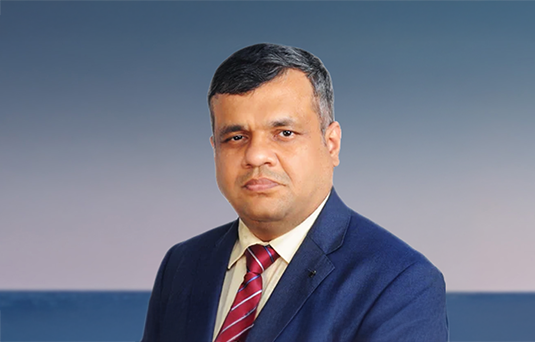
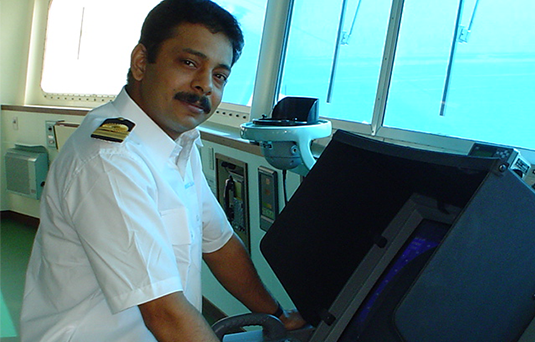
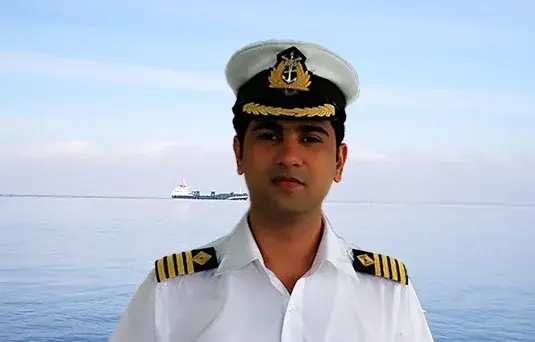
Capt. Sreekanth
"A good Captain should be a role model. You have to do what you expect others to do."
01
You've spent a large part of your career at sea before eventually moving ashore. But let's go right back to the beginning. When you were growing up, was shipping something you always imagined yourself doing?
Not really. As a child, I wasn't even very aware of shipping as a career. Like most children, I had different dreams. At one point, I actually wanted to become a doctor.
My first real introduction to shipping came through my uncle. He was an electrical engineer who later went to sea as an electrical officer. Watching his journey made me realise that this was a profession one could actually pursue.
I also grew up in Kochi, so ships were something I saw around me. We would travel by ferry, and I remember watching these large vessels coming into the harbour. There was something fascinating about seeing them and wondering where they had come from and where they were going.
Then, when I was around the eighth or tenth standard, I saw an advertisement in the newspaper for joining the Merchant Navy.
I showed it to my father and asked him, "How do I join this?"
He told me, "First finish your studies. Get good marks. Then you can think about it."
I think that's when the idea really began to take shape.
My first real introduction to shipping came through my uncle. He was an electrical engineer who later went to sea as an electrical officer. Watching his journey made me realise that this was a profession one could actually pursue.
I also grew up in Kochi, so ships were something I saw around me. We would travel by ferry, and I remember watching these large vessels coming into the harbour. There was something fascinating about seeing them and wondering where they had come from and where they were going.
Then, when I was around the eighth or tenth standard, I saw an advertisement in the newspaper for joining the Merchant Navy.
I showed it to my father and asked him, "How do I join this?"
He told me, "First finish your studies. Get good marks. Then you can think about it."
I think that's when the idea really began to take shape.
02
So it wasn't one dramatic decision. The interest seems to have grown gradually. What happened when you finally finished Class XII?
The advertisement appeared again, and this time I applied.
The entrance examination was in Chennai. It was actually my first trip there. My father and I travelled by train, stayed in a hotel and went together to the examination centre.
I cleared the examination and was called for an interview in Mumbai. Again, my father travelled with me.
The selection process took several days. My interview happened early, but the results were announced only a few days later. So we got an unexpected opportunity to explore Mumbai and even travelled to Pune to visit relatives while we waited.
Then we learnt that I had been selected.
My father supported me completely throughout the process. His attitude was always, "Whatever you want to become, become that."
My mother was understandably more apprehensive. For her, the thought of me being away for months at a time was difficult.
But my father never tried to choose a career for me. That freedom and support made a difference.
The entrance examination was in Chennai. It was actually my first trip there. My father and I travelled by train, stayed in a hotel and went together to the examination centre.
I cleared the examination and was called for an interview in Mumbai. Again, my father travelled with me.
The selection process took several days. My interview happened early, but the results were announced only a few days later. So we got an unexpected opportunity to explore Mumbai and even travelled to Pune to visit relatives while we waited.
Then we learnt that I had been selected.
My father supported me completely throughout the process. His attitude was always, "Whatever you want to become, become that."
My mother was understandably more apprehensive. For her, the thought of me being away for months at a time was difficult.
But my father never tried to choose a career for me. That freedom and support made a difference.
03
And suddenly something you had first seen in a newspaper as a schoolboy had become real. What were those first few months like?
Everything happened quite quickly after the selection.
I began my pre-sea training in Mumbai in 2004. At the time, the course structure was quite different from what it is today. After completing the training, we had to complete the required sea time before becoming eligible for the examinations and licences needed to progress further.
My first vessel was a crude-oil tanker.
Interestingly, the vessel had been built in Kochi, so there was a nice connection for me personally.
I spent almost a year on board.
I began my pre-sea training in Mumbai in 2004. At the time, the course structure was quite different from what it is today. After completing the training, we had to complete the required sea time before becoming eligible for the examinations and licences needed to progress further.
My first vessel was a crude-oil tanker.
Interestingly, the vessel had been built in Kochi, so there was a nice connection for me personally.
I spent almost a year on board.
04
A year is a very long time for a young person to suddenly be away from home. Did you ever have that moment of thinking, "This isn't for me"?
No, I never really felt like quitting.
Of course, there was homesickness. But when you're young, there is also a tremendous sense of excitement. You're travelling, seeing places you've never seen before and experiencing a completely different way of life.
For the first few months, we operated largely along the Indian coast. Later, we sailed towards the Gulf.
Since our voyages sometimes brought us back to Kochi, I occasionally even got an opportunity to visit home.
That made the transition easier.
I enjoyed those months. There was never a point when I thought I had made the wrong career choice.
Of course, there was homesickness. But when you're young, there is also a tremendous sense of excitement. You're travelling, seeing places you've never seen before and experiencing a completely different way of life.
For the first few months, we operated largely along the Indian coast. Later, we sailed towards the Gulf.
Since our voyages sometimes brought us back to Kochi, I occasionally even got an opportunity to visit home.
That made the transition easier.
I enjoyed those months. There was never a point when I thought I had made the wrong career choice.
05
Your early career gave you experience on tankers and bulk carriers, and after joining MOL in 2008, you spent your sailing career largely on car carriers. If someone gave you a choice today, is there still a type of vessel you'd like to experience?
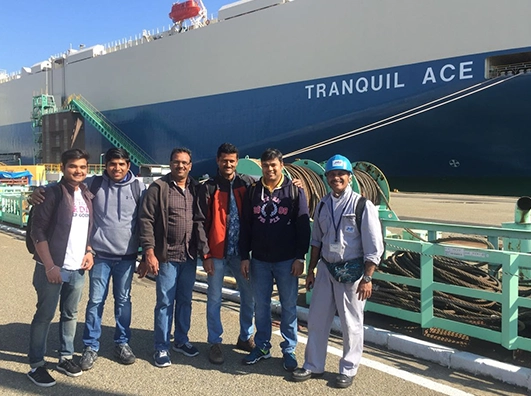
A container vessel.
Simply because that's one type of ship I've never sailed on.
There were a couple of occasions when there were plans to put me on one, but they didn't materialise. Sometimes you plan for one vessel and then an immediate requirement comes up somewhere else.
I was never very demanding about it. Whatever vessel was offered, I was willing to take.
So a container vessel remains one experience I would still like to have.
Simply because that's one type of ship I've never sailed on.
There were a couple of occasions when there were plans to put me on one, but they didn't materialise. Sometimes you plan for one vessel and then an immediate requirement comes up somewhere else.
I was never very demanding about it. Whatever vessel was offered, I was willing to take.
So a container vessel remains one experience I would still like to have.
06
Across all those years at sea, what are the small things you remember most fondly?
A lot depended on the people you were sailing with.
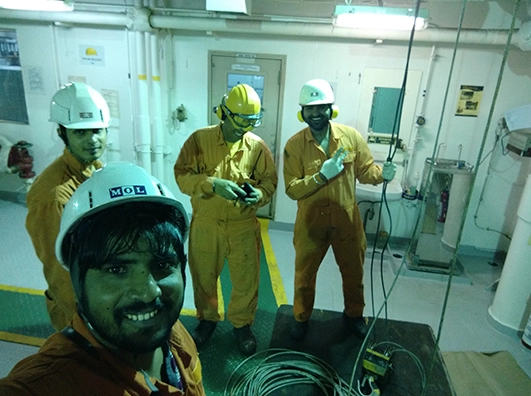
Every ship had a different mix of people, so every experience was slightly different. But we would usually make it a point to spend some time together whenever work allowed.
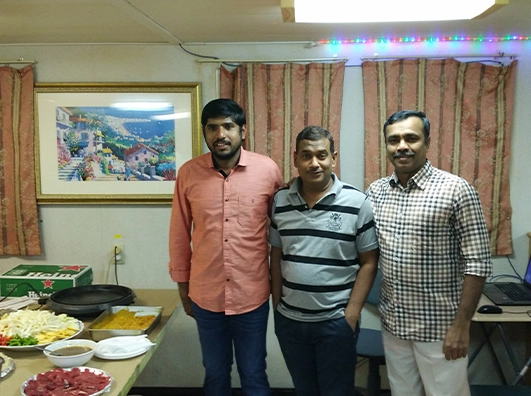
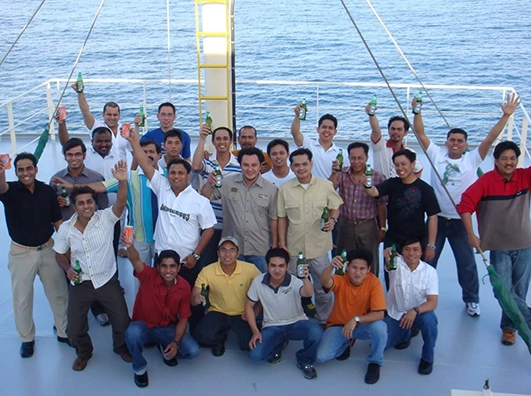
In the evenings, we might sit together and watch a movie. Sundays were particularly enjoyable. After lunch, people would gather, have a small get-together or simply spend time together.
They sound like very ordinary things, but when you're living and working with the same people for months, those moments become important.
The ship isn't only your workplace. For that period, it is also your home.
Every ship had a different mix of people, so every experience was slightly different. But we would usually make it a point to spend some time together whenever work allowed.
In the evenings, we might sit together and watch a movie. Sundays were particularly enjoyable. After lunch, people would gather, have a small get-together or simply spend time together.
They sound like very ordinary things, but when you're living and working with the same people for months, those moments become important.
The ship isn't only your workplace. For that period, it is also your home.
07
And what was the one part of sailing you never learnt to enjoy?
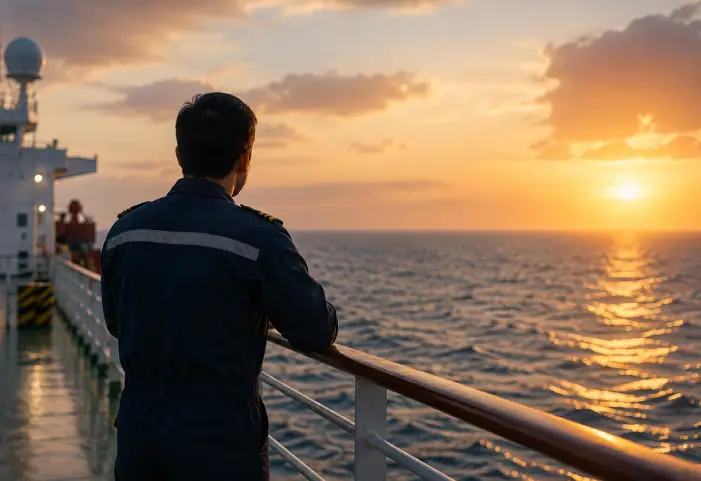
Rough seas!
Even after all those years, if the sea became particularly rough, I could still become seasick.
It was something I never completely overcame.
Interestingly, I don't have the same problem travelling by aircraft or other modes of transport. It was specifically the motion at sea.
So even after years of sailing, there were some things I simply had to accept.
Even after all those years, if the sea became particularly rough, I could still become seasick.
It was something I never completely overcame.
Interestingly, I don't have the same problem travelling by aircraft or other modes of transport. It was specifically the motion at sea.
So even after years of sailing, there were some things I simply had to accept.
08
Seventeen years at sea must also leave you with moments that are much harder to forget. Was there ever an incident that changed an ordinary day into something completely different?
I actually consider myself fortunate because I haven't experienced some of the extreme situations you sometimes hear other seafarers describe.
But there is one incident I remember very clearly.
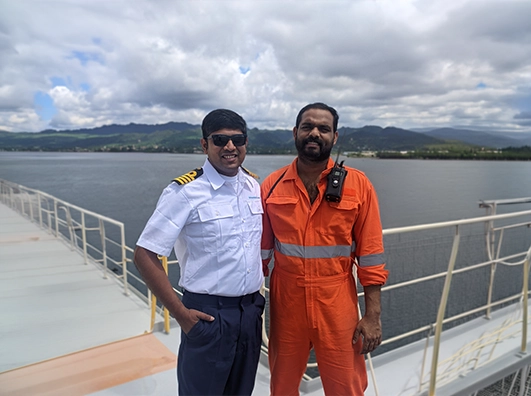
I was Chief Mate at the time, and we were sailing from Panama towards Japan.
One evening, at around six o'clock, I saw our electrical officer on the bridge. He was an older gentleman and was still in his boiler suit even though most of the day's work had finished.
I casually asked him why he hadn't gone for dinner.
He said he wasn't feeling hungry and still had some work to finish.
At the time, I didn't think too much about it.
Then, sometime around eleven or midnight, the Third Officer called me and said the Captain wanted me in the electrical officer's cabin.
When I reached there, he was on the floor.
He had suffered a heart attack.
Fortunately, before collapsing, he had managed to call the bridge and tell them that something was wrong. The Master, Chief Engineer and others responded immediately.
He was still conscious. We administered the medicines available on board while the Master contacted radio medical services for advice.
We then diverted the vessel towards the nearest suitable port in Mexico and were eventually able to transfer him safely ashore for medical attention.
Thankfully, he survived.
But there is one incident I remember very clearly.
I was Chief Mate at the time, and we were sailing from Panama towards Japan.
One evening, at around six o'clock, I saw our electrical officer on the bridge. He was an older gentleman and was still in his boiler suit even though most of the day's work had finished.
I casually asked him why he hadn't gone for dinner.
He said he wasn't feeling hungry and still had some work to finish.
At the time, I didn't think too much about it.
Then, sometime around eleven or midnight, the Third Officer called me and said the Captain wanted me in the electrical officer's cabin.
When I reached there, he was on the floor.
He had suffered a heart attack.
Fortunately, before collapsing, he had managed to call the bridge and tell them that something was wrong. The Master, Chief Engineer and others responded immediately.
He was still conscious. We administered the medicines available on board while the Master contacted radio medical services for advice.
We then diverted the vessel towards the nearest suitable port in Mexico and were eventually able to transfer him safely ashore for medical attention.
Thankfully, he survived.
09
What stays with you from an experience like that—the fear of what could have happened, or the importance of knowing what to do when it did?
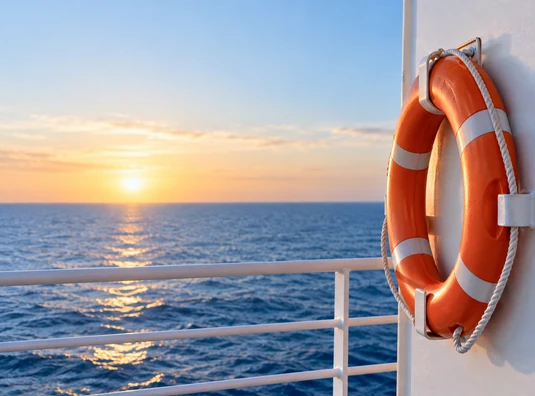
For me, it reinforces the importance of preparation.
At sea, situations can change very quickly. You may be going about an entirely normal day and suddenly you're dealing with an emergency.
That's why everybody needs to know their role and why procedures, training and preparedness matter so much.
When something happens, you cannot start figuring everything out from the beginning.
You have to be ready to respond.
At sea, situations can change very quickly. You may be going about an entirely normal day and suddenly you're dealing with an emergency.
That's why everybody needs to know their role and why procedures, training and preparedness matter so much.
When something happens, you cannot start figuring everything out from the beginning.
You have to be ready to respond.
10
You eventually became Captain in 2021. Once you're responsible for an entire vessel, what's harder: managing the ship and its cargo, or managing the people aboard it?
I wouldn't necessarily say managing people is difficult, but every individual is different. You have to understand how to approach each person.
Cargo is easier in that sense.
Cargo doesn't have feelings. People do.
As Captain, you're working with different personalities, cultures and nationalities. Even people from the same country can have completely different backgrounds and ways of communicating.
You have to understand that.
I've generally been a calm person. I don't believe in unnecessarily shouting at people. There may occasionally be situations where you have to be firm, but shouting should not be your normal way of managing a team.
Cargo is easier in that sense.
Cargo doesn't have feelings. People do.
As Captain, you're working with different personalities, cultures and nationalities. Even people from the same country can have completely different backgrounds and ways of communicating.
You have to understand that.
I've generally been a calm person. I don't believe in unnecessarily shouting at people. There may occasionally be situations where you have to be firm, but shouting should not be your normal way of managing a team.
11
So what, in your view, separates someone who simply holds the rank of Captain from someone people genuinely want to follow?
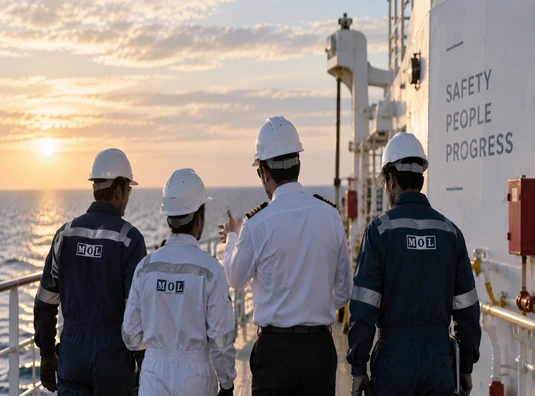
A Captain should be a role model.
You have to do what you expect others to do. You can't preach something and behave differently yourself.
You also need to understand people's emotions and treat everybody equally.
Communication is extremely important, particularly when you have people from different cultures and backgrounds living and working together.
And you have to be approachable.
People should be able to look at the Captain and feel, "If I have a problem, I can go and speak to him."
That is very important.
You have to do what you expect others to do. You can't preach something and behave differently yourself.
You also need to understand people's emotions and treat everybody equally.
Communication is extremely important, particularly when you have people from different cultures and backgrounds living and working together.
And you have to be approachable.
People should be able to look at the Captain and feel, "If I have a problem, I can go and speak to him."
That is very important.
12
You also sailed through an extraordinary technological transition. Do you remember the first time technology genuinely changed life at sea for you personally?
Yes. I remember it very clearly.
When I joined my first vessel, there wasn't even a satellite phone on board.
If you wanted to speak to your family, you had to use the ship's radio communication system to connect to a radio station ashore, which would then connect you to a landline.
Sometimes you couldn't reach the station. Sometimes the signal wasn't good. The clarity could also be poor.
Towards the end of my tenure on that vessel, a satellite phone was installed in the Master's cabin.
The technicians were still testing it when I happened to be there one day. They asked me, "Do you want to contact your parents?"
I said yes immediately.
They dialled our home landline and I spoke to my parents.
That was the first time I ever used a satellite phone.
It seems very ordinary now, but at that time it was something special.
When I joined my first vessel, there wasn't even a satellite phone on board.
If you wanted to speak to your family, you had to use the ship's radio communication system to connect to a radio station ashore, which would then connect you to a landline.
Sometimes you couldn't reach the station. Sometimes the signal wasn't good. The clarity could also be poor.
Towards the end of my tenure on that vessel, a satellite phone was installed in the Master's cabin.
The technicians were still testing it when I happened to be there one day. They asked me, "Do you want to contact your parents?"
I said yes immediately.
They dialled our home landline and I spoke to my parents.
That was the first time I ever used a satellite phone.
It seems very ordinary now, but at that time it was something special.
.webp)
13
And by the time you sailed on your final vessel, you could video-call your family. What has that transformation meant for seafarers?
It has made life much better.
Initially, satellite calls were extremely expensive. You could spend quite a lot of money for only a few minutes of conversation.
Then email became available, although even that was a long process initially. There were shared computers, and sometimes you would draft a message that would go through the Captain. The reply would come back through the same system.
Gradually, internet speeds improved and communication became easier.
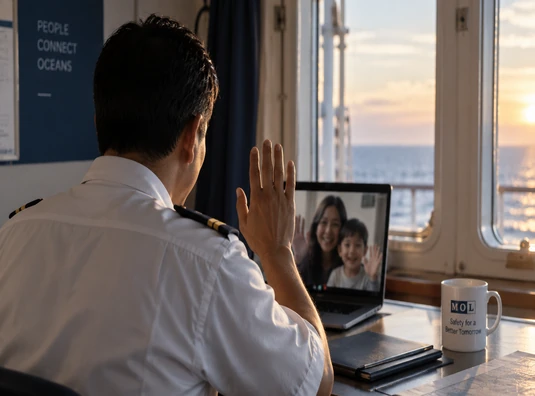
By the time I was on my last vessel, I could make video calls with my family.
Today, connectivity is even better.
For seafarers, that's a huge change. When you're away for months, being able to see and speak to your family regularly makes a real difference.
Initially, satellite calls were extremely expensive. You could spend quite a lot of money for only a few minutes of conversation.
Then email became available, although even that was a long process initially. There were shared computers, and sometimes you would draft a message that would go through the Captain. The reply would come back through the same system.
Gradually, internet speeds improved and communication became easier.
By the time I was on my last vessel, I could make video calls with my family.
Today, connectivity is even better.
For seafarers, that's a huge change. When you're away for months, being able to see and speak to your family regularly makes a real difference.
14
You clearly still loved sailing. So what finally made you decide in 2022 that it was time to come ashore?
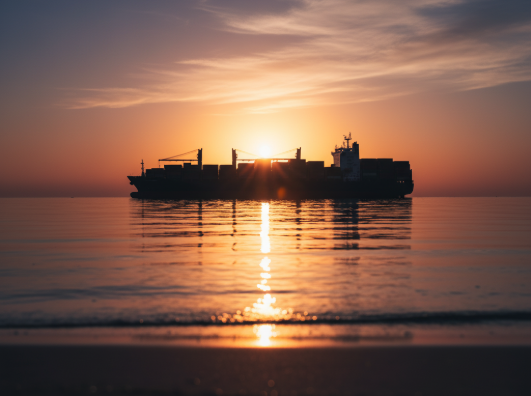
Family. If circumstances had been different, I probably would have continued sailing.
Before marriage, I used to sail for eight or nine months in a year. If there was a requirement, I would pack my bags and go.
But life changes.
After my son was born, the pandemic happened. During that period, in 2020, we lost my father-in-law.
He was also a Captain. He suffered a heart attack while he was on board a vessel. Although he was taken ashore for medical attention, unfortunately he didn't survive.
That had a very deep impact on our family, particularly my wife.
Later, when I received an opportunity to move ashore, I discussed it with her.
Her response was immediate: if this was a good opportunity and it meant I could be with the family, we should take it.
So I did.
Before marriage, I used to sail for eight or nine months in a year. If there was a requirement, I would pack my bags and go.
But life changes.
After my son was born, the pandemic happened. During that period, in 2020, we lost my father-in-law.
He was also a Captain. He suffered a heart attack while he was on board a vessel. Although he was taken ashore for medical attention, unfortunately he didn't survive.
That had a very deep impact on our family, particularly my wife.
Later, when I received an opportunity to move ashore, I discussed it with her.
Her response was immediate: if this was a good opportunity and it meant I could be with the family, we should take it.
So I did.
15
Had that opportunity not come along, do you think you would still have been sailing?
Yes, I think I would have continued.
I enjoyed sailing.
For many years, whenever there was an opportunity to go back to sea, I was ready to pack my bags and leave.
That was simply part of who I was.
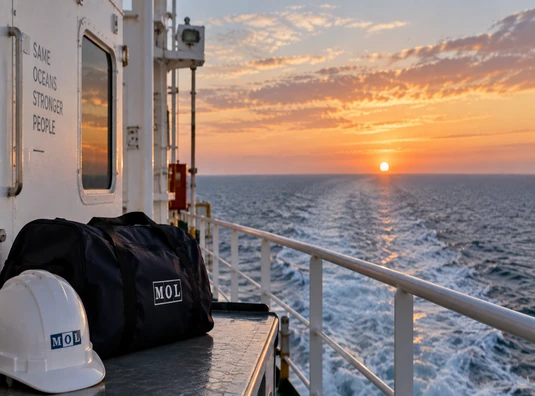
In that sense, I suppose there is some truth to the saying: once a seafarer, always a seafarer.
I enjoyed sailing.
For many years, whenever there was an opportunity to go back to sea, I was ready to pack my bags and leave.
That was simply part of who I was.
In that sense, I suppose there is some truth to the saying: once a seafarer, always a seafarer.
16
Having lived that life yourself, what would you tell a young person who looks at shipping today and sees the travel, the career opportunities and perhaps the financial rewards?
I would tell them to understand the profession completely before choosing it.
Being a seafarer is challenging and demanding.
If you look only at the financial side and assume that it is an easy way to build a career, then you will probably be disappointed.
There is a reason the profession rewards people well. There are responsibilities, risks and sacrifices that come with it.
You have to be prepared for those realities.
Most importantly, you need genuine interest and passion for the profession. If you have that, and you're willing to work hard, then you can build a very rewarding career at sea.
Being a seafarer is challenging and demanding.
If you look only at the financial side and assume that it is an easy way to build a career, then you will probably be disappointed.
There is a reason the profession rewards people well. There are responsibilities, risks and sacrifices that come with it.
You have to be prepared for those realities.
Most importantly, you need genuine interest and passion for the profession. If you have that, and you're willing to work hard, then you can build a very rewarding career at sea.

17
And would you give the same advice to young women considering a career at sea?
The industry has changed considerably. Communication has improved, working environments have evolved and more women are entering the profession.
There is no reason to say that this field isn't for women.
The profession is challenging, but those challenges are part of being a seafarer. If someone is passionate about it and willing to accept the demands that come with the career, then they should absolutely consider it.
Anyone who has the ability, commitment and interest should be able to come on board.
There is no reason to say that this field isn't for women.
The profession is challenging, but those challenges are part of being a seafarer. If someone is passionate about it and willing to accept the demands that come with the career, then they should absolutely consider it.
Anyone who has the ability, commitment and interest should be able to come on board.

18
You've now experienced two very different worlds—years aboard ships and then life ashore. Is there something the sea has taught you that you find yourself carrying into everyday life?
Safety and discipline.
At sea, safety is always the most important consideration.
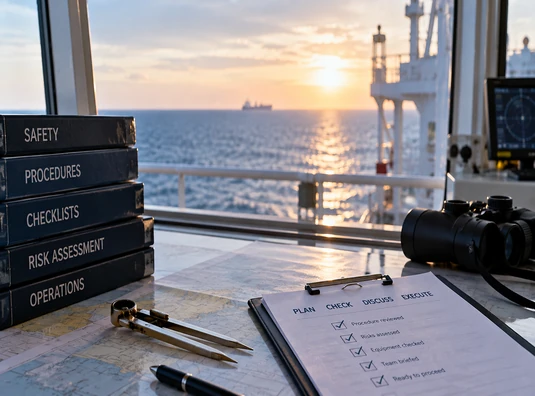
There are established procedures for almost every operation. There are checklists, discussions and risk assessments depending on the nature of the work.
If you follow those procedures diligently and take the required precautions, the chances of something going wrong become much lower.
So the sea teaches you to be meticulous.
You don't bypass a procedure because you've done the job many times before. You don't take a shortcut simply because it seems quicker.
You prepare properly, understand the risks and then do the job.
That mindset stays with you even when you come ashore.
At sea, safety is always the most important consideration.
There are established procedures for almost every operation. There are checklists, discussions and risk assessments depending on the nature of the work.
If you follow those procedures diligently and take the required precautions, the chances of something going wrong become much lower.
So the sea teaches you to be meticulous.
You don't bypass a procedure because you've done the job many times before. You don't take a shortcut simply because it seems quicker.
You prepare properly, understand the risks and then do the job.
That mindset stays with you even when you come ashore.
19
You've been with MOL since 2008, first at sea and now ashore. After experiencing the organisation from both sides, what has kept you here?
For me, one of the strongest things about MOL is the importance it gives to seafarers and to safety.
This is an organisation built around ships and the people who operate them, so there is a genuine understanding of the seafarer's role.
The safety culture is also very strong.
You will never be encouraged to take a shortcut simply for convenience or a small commercial gain. Procedures and established practices matter.
At the same time, when you're doing the right thing and following those principles, you know the organisation will support you.
That combination—safety, values, ethics and support for people—is something I've valued throughout my time here.
This is an organisation built around ships and the people who operate them, so there is a genuine understanding of the seafarer's role.
The safety culture is also very strong.
You will never be encouraged to take a shortcut simply for convenience or a small commercial gain. Procedures and established practices matter.
At the same time, when you're doing the right thing and following those principles, you know the organisation will support you.
That combination—safety, values, ethics and support for people—is something I've valued throughout my time here.
20
Finally, after all those years at sea, becoming a Captain and then beginning a second chapter ashore, what do you think the sea ultimately taught you?
To do things properly.
At sea, you understand that preparation matters. Procedures matter. The people around you matter.
A shortcut may save a little time, but it can also create a much bigger problem.
The same applies to leadership. You can't expect something from your team that you're unwilling to do yourself. You have to understand people, treat them equally and be someone they feel comfortable approaching.
Those are lessons I learnt over many years at sea.
And even though I work ashore today, I don't think you ever really leave those lessons behind.
At sea, you understand that preparation matters. Procedures matter. The people around you matter.
A shortcut may save a little time, but it can also create a much bigger problem.
The same applies to leadership. You can't expect something from your team that you're unwilling to do yourself. You have to understand people, treat them equally and be someone they feel comfortable approaching.
Those are lessons I learnt over many years at sea.
And even though I work ashore today, I don't think you ever really leave those lessons behind.